Black Wide-Tooth Comb Set: Natural Hair & Real-Hair Wigs

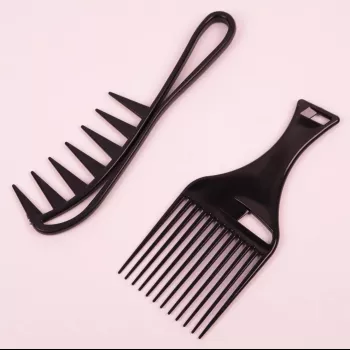
Black Wide-Tooth Comb Set for Natural Hair and Real Hair Wigs
Wide-tooth combs are a staple for detangling textured hair and maintaining real-hair wigs without unnecessary snagging or breakage. A well-made comb set helps handle wash days, styling, and wig upkeep with less pulling, while keeping curls, coils, and wave patterns more intact. If the goal is smoother detangling with fewer snapped strands and less disruption to your natural pattern, a wide-tooth option is a practical, everyday tool.
What a wide-tooth comb set is used for
- Detangling curly, coily, and kinky textures while reducing tugging
- Distributing conditioner or leave-in through damp hair more evenly than fine-tooth combs
- Separating curls for volume without disturbing the overall pattern as much as brushes
- Detangling wig lengths and ends while protecting knots and minimizing shedding
- Refreshing styles during the week (especially for low-manipulation routines)
Why wide teeth matter for natural hair and real-hair wigs
The spacing between teeth is the entire point: more room means hair can slide through with less friction. That usually translates to less “catching” on tangles, fewer abrupt stops, and less force needed to get through a section.
- More space between teeth helps hair pass through with less friction, which can mean fewer snapped strands
- Ideal for detangling in sections—especially on damp hair with slip (conditioner/detangler)
- Helps avoid over-separating curl clumps compared with smaller-tooth combs
- For wigs, gentler detangling can help preserve hair alignment and reduce stress near the cap and wefts
Dermatology and hair-care experts routinely emphasize gentle handling, working in sections, and using products that add “slip” to reduce breakage—especially for curly textures. Helpful references include the American Academy of Dermatology Association’s curly-hair care tips and Cleveland Clinic guidance on detangling without damage.
Set overview: Black Wide-Tooth Comb Set
The Black Wide-Tooth Comb Set for Natural Hair & Real Hair Wigs is built for everyday detangling on textured hair and for routine maintenance on real-hair wigs. The black colorway fits easily into salon kits, travel pouches, and bathroom storage—and it’s a budget-friendly way to keep a comb where you actually need it (home, gym bag, and wig station).
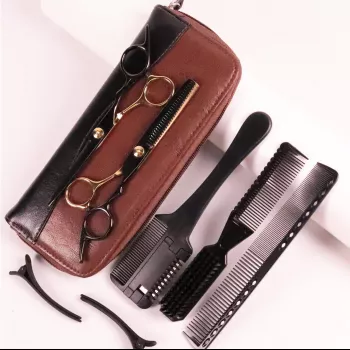
For wig wearers who also trim, shape, or do detailed styling, pairing a detangling comb with a more complete toolkit can streamline upkeep. A complementary option is the Premium 8-Piece Barber Cutting & Styling Kit for Real Hair Wigs.
Quick look at the comb set
| Feature | Why it helps |
|---|---|
| Wide-tooth design | Reduces snagging and helps detangle with less pulling |
| Suitable for natural hair textures | Supports section-by-section detangling and curl-friendly separation |
| Works for real-hair wigs | Gentler on lengths and ends; helps reduce stress on cap areas when used carefully |
| Black finish | Easy to spot in a kit and generally hides product residue better than lighter colors |
How to detangle natural hair with a wide-tooth comb
Technique matters as much as the tool. The goal is to reduce repeated passes, avoid rushing through knots, and keep tension low—especially around fragile ends.
- Start on damp hair with slip: apply conditioner, detangler, or leave-in before combing.
- Work in sections: clip hair into 4–8 sections to control tangles and reduce repeated passes.
- Begin at the ends: detangle the last few inches first, then move upward toward the roots.
- Use gentle tension: hold the section near the root to reduce pulling on the scalp.
- Follow with fingers if needed: finger-detangle stubborn knots before reintroducing the comb.
For tighter coils, it often helps to keep the section slightly stretched (not yanked) while you slowly work upward. If you feel the comb stopping abruptly, pause and add more slip rather than pushing through.
How to detangle and maintain real-hair wigs safely
Real-hair wigs can tangle like natural hair, but the construction adds an extra consideration: knots, wefts, and cap areas can be stressed by aggressive pulling. A wide-tooth comb is a gentle choice when used with support and patience.
- Detangle before washing: remove tangles on dry or lightly misted hair to prevent matting during wash.
- Support the cap: hold the wig firmly (or place it on a wig stand) and avoid yanking near the knots.
- Work from ends upward: the same ends-to-roots approach helps protect the hair and wefts.
- Use wig-safe products: lightweight detanglers and conditioners can help prevent buildup.
- Limit heat and friction: reduce aggressive brushing; use the comb for gentle separation and smoothing.
If shedding increases suddenly, slow down and reassess how much tension is being used near the cap. Detangling in smaller sections often reduces stress on the base.
Care and cleaning: keeping combs smooth and hygienic
When to use a wide-tooth comb (and when not to)
Simple routine ideas that pair well with a comb set
FAQ
Is a wide-tooth comb better than a brush for natural hair?
A wide-tooth comb can reduce snagging and help preserve curl clumps, especially on damp hair with conditioner or a detangler. Some brushes work well for specific styling, but wide teeth often make low-friction detangling easier on textured hair.
Can a wide-tooth comb be used on real-hair wigs without causing shedding?
Yes, as long as the technique is gentle: start at the ends, work upward, support the cap, and use product for slip. Some shedding is normal over time, but rough pulling near knots or wefts can increase it.
Should hair be detangled wet or dry with a wide-tooth comb?
For most natural textures, damp hair with slip (conditioner, leave-in, or detangler) is a safer choice than dry detangling. Soaking-wet hair can be more fragile, so use light tension and slow passes rather than forcing the comb through.








Leave a comment