Sonic Toothbrush: Soft DuPont Bristles, 30-Day Battery
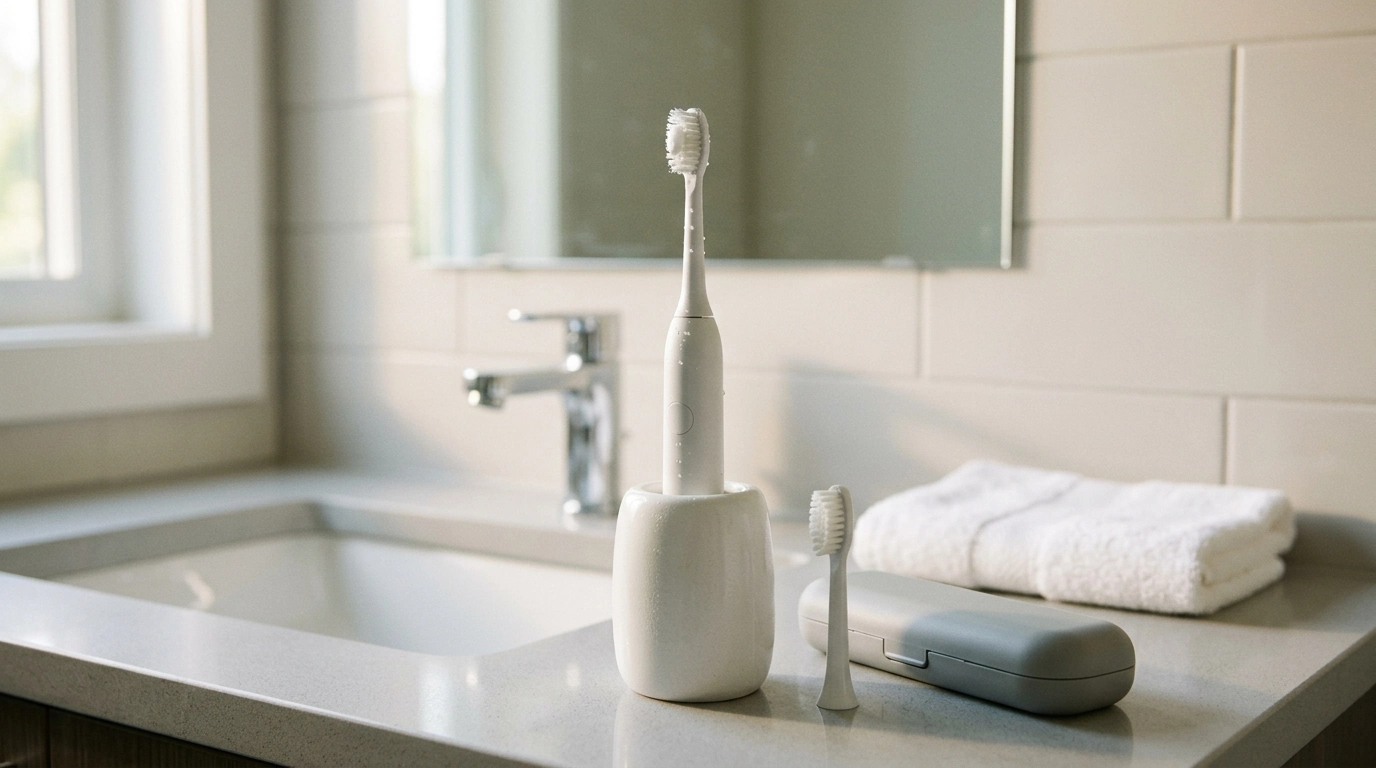
Electric Sonic Toothbrush with Soft DuPont Bristles & 30-Day Battery Life
A sonic toothbrush can make daily brushing feel easier on gums while still delivering a thorough clean. This model pairs soft DuPont bristles with multiple cleaning options and a long-lasting battery designed to reduce charging hassle at home, work, or on the go. If consistency is the goal—two minutes, twice a day—a comfortable brush head, helpful pacing cues, and fewer “dead battery” surprises can make the routine easier to stick with. For more guidance, see Safety and Design Aspects of Powered Toothbrush—A Narrative ….
What Makes a Sonic Toothbrush Different
Sonic toothbrushes use rapid vibrations to boost how toothpaste foam and fluid move around teeth and along the gumline. That extra motion can help with coverage in spots that are easy to miss—especially around back molars and the edges near the gums. For further reading, see 5 Best Eco-Friendly Electric Toothbrush Brands – TheRoundup.org.
- Uses high-frequency vibrations to help move fluid and foam around teeth and along the gumline
- Often improves consistency by making it easier to reach back teeth and maintain even pressure
- Timer and pacing cues can support the recommended brushing duration and coverage
- A gentle brush head and proper technique remain important for gum comfort
For general brushing guidance and toothbrush considerations, the American Dental Association (ADA) and the CDC oral health basics are solid references.
Soft DuPont Bristles: Comfort Without Skipping the Clean
Bristle feel matters more than many people expect. Soft bristles tend to be more comfortable for sensitive gums and may lower the chance of brushing too aggressively. When combined with sonic motion, soft filaments can still clean well—especially when technique stays steady and pressure stays light.
- Soft bristles can be more comfortable for sensitive gums and may reduce the risk of over-scrubbing
- Rounded-tip filaments are intended to feel smoother along the gumline
- Best results come from letting the brush do the work—light pressure and slow, guided passes
- Replace the brush head on a regular schedule or sooner if bristles splay
If gums feel tender after switching to electric, a common fix is simply easing up: hold the handle with fingertips instead of a firm fist grip, and pause the temptation to “scrub.”
30-Day Battery Life: Why It Matters for Daily Routines and Travel
A long-lasting battery helps remove one of the most common friction points with electric brushes: remembering to charge. With a roughly month-long runtime (depending on mode and habits), it’s easier to keep the brush in the bathroom, gym bag, or suitcase without adding another daily charging task.
- Long battery life helps keep brushing consistent by minimizing forgotten charges
- Convenient for travel, dorms, or keeping one charger for multiple devices in a household
- A longer charge interval can be helpful for people who prefer a clutter-free countertop
- Battery performance can vary based on mode choice and brushing frequency
People who switch modes often—like using a stronger polish setting twice a day—may see shorter time between charges. Standard daily-clean modes typically stretch battery life the farthest.
Modes, Timers, and Daily Use Features to Look For
The most useful features tend to be the ones that support calm, consistent brushing. Modes help match sensitivity levels, while a timer removes guesswork. Together, they encourage even coverage without rushing.
- Multiple modes can support different needs such as gentle cleaning, daily cleaning, or polishing
- A two-minute timer and 30-second quadrant pacing can help cover all areas evenly
- Ergonomic handle and secure grip can improve control, especially with wet hands
- Water resistance supports safe use at the sink; avoid fully submerging unless specified
For a broader look at how powered brushes perform versus manuals across studies, the Cochrane Review on powered toothbrushes summarizes evidence on plaque and gingivitis reduction.
Quick Specs Snapshot
A fast way to compare key purchase considerations before deciding. Use the checklist to match comfort needs (soft bristles) and lifestyle needs (battery life).
| Feature | What it means for daily use |
|---|---|
| Soft DuPont bristles | Gentler feel on gums while brushing twice daily |
| Sonic vibration | Helps with consistent, even cleaning across tooth surfaces |
| 30-day battery life | Less frequent charging; easier travel packing |
| Built-in timer/pacing | Supports brushing long enough and covering all quadrants |
| Compact charging needs | Reduces countertop clutter and simplifies charging routines |
How to Brush for Better Results (Without Irritating Gums)
Common Comparisons: Manual vs. Electric, Soft vs. Medium
Product Option
For a comfort-forward daily routine with fewer charging interruptions, consider the Electric Sonic Toothbrush with Soft DuPont Bristles & 30-Day Battery Life. It’s designed to support gentle gum contact while still providing the benefits of sonic vibration and built-in timing cues.
More in-stock picks
- Premium 8-Piece Barber Cutting & Styling Kit for Real Hair Wigs (useful for at-home grooming routines)
- No-Pull Reflective Adjustable Dog Harness with Easy Strap-On Design (a practical add-on for daily walks)
- Cozy Velvet Winter Pajama Set for Boys (a warm seasonal essential)
FAQ
Are soft bristles effective for removing plaque?
Yes—soft bristles can remove plaque effectively when you use light pressure, slow passes, and brush for a full two minutes. The key is consistent contact and letting the brush do the work rather than scrubbing.
How often should the brush head be replaced?
A common guideline is about every three months, or sooner if the bristles start to splay or after an illness. Worn bristles don’t clean as efficiently and can feel rougher along the gumline.
How can battery life be extended between charges?
Use the standard mode when possible, follow the device’s charging instructions, and keep the handle and charging area clean and dry. Avoid unnecessary charging habits if the model doesn’t require constant docking.










Leave a comment