Wired RGB Switch Gamepad: Docked Play, No Charging
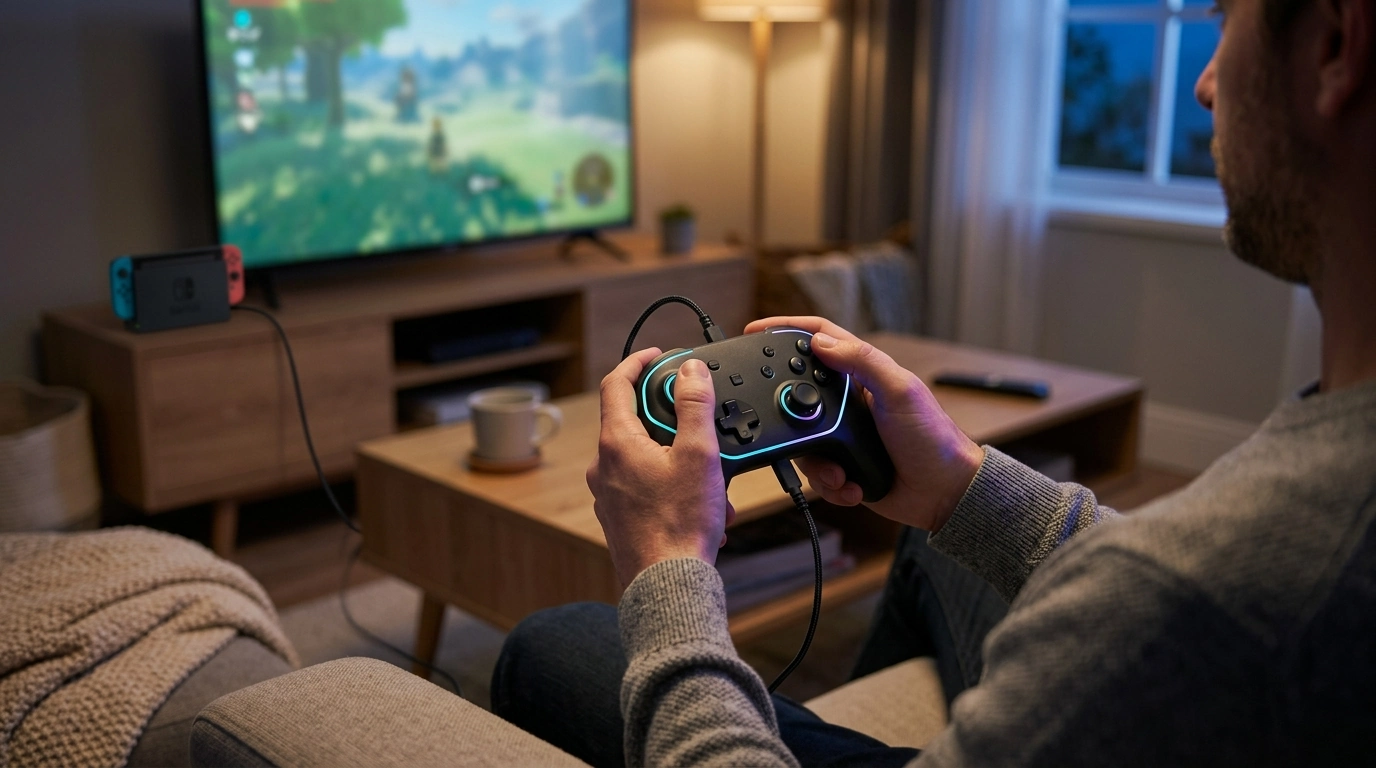
Wired RGB Gamepad for Nintendo Switch & OLED
A wired controller can be the simplest way to get steady input, avoid charging downtime, and add a bit of desk-ready style. This RGB gamepad is built for Nintendo Switch and Switch OLED setups where a reliable cable connection, comfortable grip, and responsive buttons matter for long sessions at home. For more guidance, see Reviews by o0genesis0o | Page 2 – Head-Fi.
What This Gamepad Is Best For
- Docked play on TV where a cable connection keeps the controller ready at all times
- Players who prefer consistent input without worrying about battery level
- Shared consoles: a wired controller is easy to hand off without pairing steps
- Setups that benefit from visible lighting effects (RGB) for low-light rooms or streaming backgrounds
If your Switch is primarily a living-room console, wired controllers fit naturally: plug in, pick up, and play without waiting for a charge or checking battery indicators. They’re also a practical “extra controller” for guests since there’s no pairing routine to remember. For further reading, see Switch Controllers with Hall Joystick for Switch/OLED, Pro Remote ….
Compatibility and Setup on Switch & Switch OLED
- Designed for Nintendo Switch and Switch OLED play; best matched with docked mode using USB
- Plug-and-play approach: connect to the console (typically via dock USB) and confirm controller settings if prompted
- For households with multiple controllers, label the cable or assign a consistent player order to avoid mix-ups
- If the controller is not recognized, re-seat the USB connection, try another USB port on the dock, and check the console’s controller options
Most wired Switch controllers are happiest when connected to the dock’s USB port, especially for TV play. If your setup has multiple controllers, a simple cable tag (or a color-coded twist tie) can prevent the “which controller is Player 1?” shuffle during quick couch co-op sessions. For official guidance on controller support and common connection issues, visit Nintendo Support.
RGB Lighting: Practical Notes
- RGB lighting adds visibility and style; keep it subtle to reduce distraction in competitive play
- Lighting can be helpful for quick controller identification during couch co-op
- If lighting is adjustable, choose a static color for comfort during longer sessions
- For nighttime play, avoid maximum brightness if it causes glare on the TV or reflects in glasses
RGB is more than decoration when you’re playing in a dim room. It can make the controller easier to spot on a dark couch, and it helps players grab the right controller quickly when swapping in and out. If you tend to play action titles where focus matters, a steady, low-brightness mode can keep the look without stealing attention during tense moments.
Controls, Comfort, and Everyday Use
- Grip and shape matter as much as button feel; prioritize relaxed wrist position for long sessions
- Check that sticks return to center smoothly and that triggers have consistent travel
- If the controller includes vibration features, confirm intensity feels balanced rather than overly harsh
- Cable management improves comfort: route the cable away from knees and chair wheels; consider a small clip or Velcro tie near the dock
Comfort is the feature that shows up after an hour. A controller that fits your hands well reduces tension in the wrists and thumbs, which can make longer sessions feel noticeably easier. For everyday play, smooth stick movement and consistent trigger travel matter as much as flashy extras, since they’re what you’ll feel in every lap, sprint, drift, and quick aim adjustment.
Quick Spec Snapshot
| Feature | Why it matters | What to confirm before buying |
|---|---|---|
| Wired USB connection | No charging downtime; consistent connection | USB plug type and whether it’s intended for dock/console use |
| RGB lighting | Style and visibility in low light | Lighting modes (static/animated) and brightness comfort |
| Ergonomic grip | Reduced hand fatigue | Shape, texture, and weight feel during extended play |
| Button response | Timing-sensitive gameplay feels more accurate | Even actuation, no sticking, consistent trigger travel |
| Stick control | Smooth movement and aiming | Centering, dead zone feel, and smooth rotation |
How to Get the Best Experience (Tips for Docked Play)
A wired controller feels best when the connection stays “invisible.” That usually comes down to placement: keep the dock stable, keep the cable relaxed, and avoid sharp angles at the USB plug. If you need extra length, choose a quality extension that holds firmly—intermittent disconnects are often caused by loose joins rather than the controller itself. You can also review the official Nintendo Switch family overview for docked-play basics at Nintendo’s Switch page.
Care, Durability, and Troubleshooting Basics
Current Price and Where to Get It
The Wired RGB Gamepad for Nintendo Switch & OLED is listed at $38.51 (USD) and marked in stock. Check the product page for the latest shipping details and any included accessories.
More In-Stock Picks
- No-Pull Reflective Adjustable Dog Harness with Easy Strap-On Design
- Premium 8-Piece Barber Cutting & Styling Kit for Real Hair Wigs
FAQ
Does a wired controller work on Nintendo Switch OLED?
Yes, the Nintendo Switch OLED supports wired USB controllers in docked mode through the dock’s USB ports. If it doesn’t respond right away, check the console’s controller settings and reconnect the USB cable.
Can RGB lighting be turned off or changed?
Many RGB controllers include lighting modes you can cycle through, and some allow dimming or turning lights off entirely. Check for a lighting button or a button combination listed in the included instructions and choose a static or lower-brightness mode for comfort.
What should be done if the controller isn’t recognized?
Unplug and firmly re-seat the USB connection, then try a different USB port on the Switch dock. If the issue continues, restart the console and reconnect the controller in docked mode.








Leave a comment