Fast Stress Relief for Busy Days: Breathing, Grounding
Break the Tension: Practical Stress Relief for Busy Days
Stress can show up as a racing mind, tight shoulders, shallow breathing, or a sense of being behind before the day even starts. Relief doesn’t always require a major lifestyle overhaul—small, repeatable techniques can calm the nervous system, reset attention, and prevent stress from stacking. The tools below focus on fast breathing drills, short meditations, simple grounding, and time management tweaks that make daily pressure feel more manageable.
For a deeper look at how stress affects the body and why it can feel so persistent, the American Psychological Association offers a helpful overview. If you’re curious about the safety and effectiveness of mindfulness practices, the National Center for Complementary and Integrative Health summarizes current evidence in plain language.
Know the Signs: When Tension Is Building
Stress is easier to interrupt when you catch it early. The goal isn’t to “never feel stressed,” but to notice the ramp-up before it turns into full-body tension or mental fog.
Common cues to watch for
- Body cues: jaw clenching, tension headaches, tight chest, upset stomach, restless legs, fatigue that doesn’t improve with rest.
- Thought cues: looping worries, catastrophizing, irritability, difficulty prioritizing, trouble focusing on a single task.
- Behavior cues: procrastination, over-checking messages, snacking for comfort, withdrawing from others, skipping breaks.
30-second self-check
Notice (1) how deep your breath is, (2) where your shoulders are sitting, and (3) whether your tongue is pressing against the roof of your mouth. Then soften all three: let the inhale be quieter, drop the shoulders slightly, and relax the tongue so it rests gently.
Fast Breathing Exercises to Downshift in 1–3 Minutes
Breath control is one of the quickest ways to nudge the stress response toward “safe enough right now.” Harvard Health notes that slow breathing can help quiet the body’s stress reaction by changing signals in the nervous system (Harvard Health Publishing).
1) Extended exhale breathing (1–2 minutes)
Inhale gently through the nose for 4 counts, then exhale for 6–8 counts. Keep the inhale easy and let the exhale do the work; a longer exhale often helps the body settle.
2) Box breathing (2–3 minutes)
Inhale 4, hold 4, exhale 4, hold 4. Repeat for 4 cycles. If breath-holding feels uncomfortable, reduce the counts (for example, 3-3-3-3) or skip the holds and simply breathe slowly.
3) Physiological sigh (30–60 seconds)
Take a normal inhale, add a short second “top-up” inhale, then exhale slowly and fully. Repeat 3–5 times. This can feel like a fast “release valve” during a sudden stress spike.
Desk-friendly posture tip
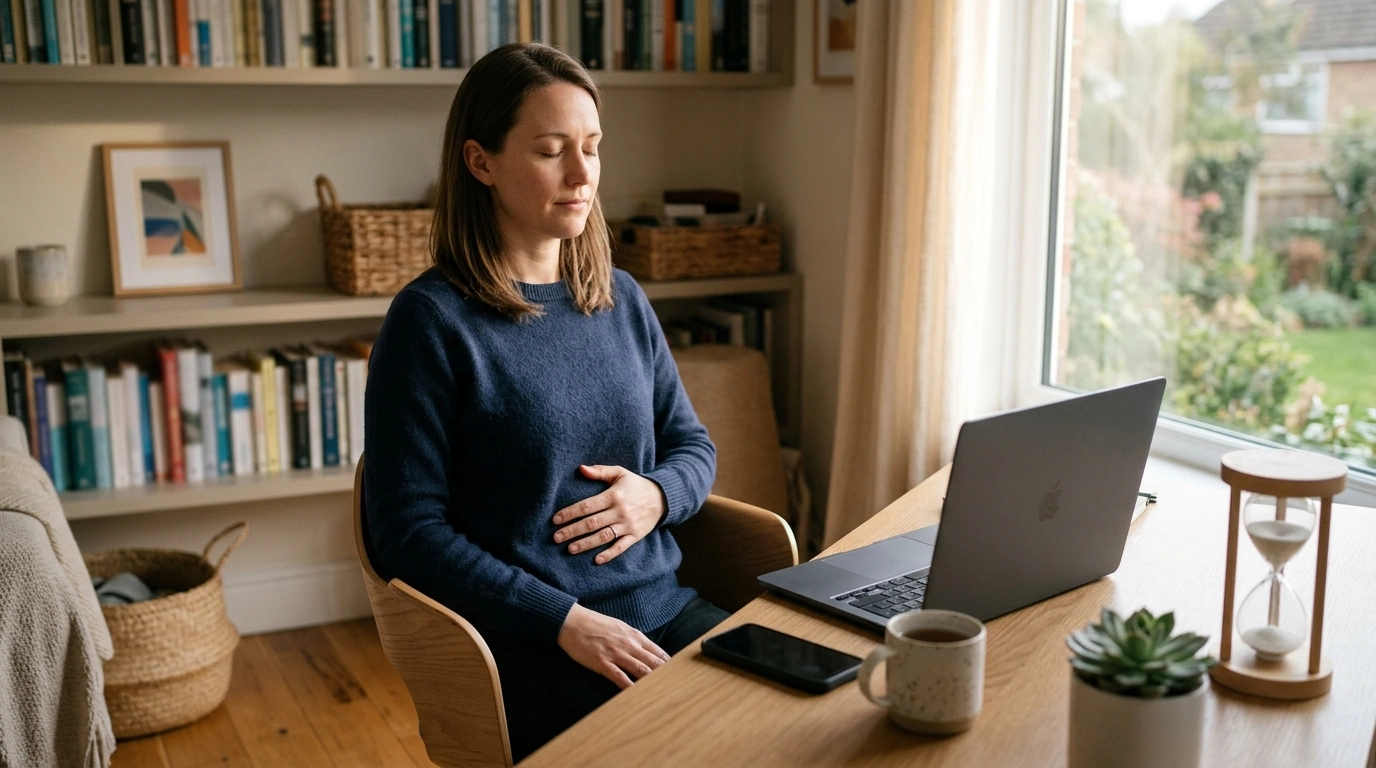
Place both feet flat, sit tall, and relax the belly on the inhale. This helps avoid shallow chest breathing that can make stress feel louder than it needs to be.
When to modify
If you feel dizzy, shorten the counts, breathe more gently, or pause and return to normal breathing for a minute.
| Technique | Best for | Time | How it feels when it’s working |
|---|---|---|---|
| Extended exhale | Racing mind, tight chest, stress before a meeting | 1–2 min | Breath slows, shoulders drop, thoughts feel less urgent |
| Box breathing | Feeling scattered, needing focus and steadiness | 2–3 min | More even attention and steadier heart rate |
| Physiological sigh | Sudden spike of stress, tension surge | 30–60 sec | A clear “release” and softer body tension |
| Nasal breathing only | Low-level stress throughout the day | Ongoing | Less reactivity and better pacing |
Quick Meditations That Fit Between Tasks
Meditation doesn’t need perfect silence or a long session. A brief practice can create a “clean break” between tasks so you’re not carrying the last conversation, email, or worry into the next thing.
Grounding Techniques for When Stress Feels Overwhelming
Time Management Tips That Reduce Stress at the Source
A Simple Daily Routine: Morning, Midday, Evening
A Guided Resource to Keep These Tools Handy
- Break the Tension: Stress Relief Techniques – Breathing Exercises, Quick Meditations, Grounding Techniques, and Time Management Tips to Reduce Stress (a compact resource designed for quick practice windows under 5 minutes).
- Cozy Velvet Winter Pajama Set for Boys (a cozy bedtime layer can support an evening wind-down routine for kids, which often lowers household stress during nighttime transitions).
FAQ
Which technique works fastest when stress spikes suddenly?
The physiological sigh is often the quickest option: inhale normally, add a short top-up inhale, then exhale slowly and fully for 3–5 rounds. Extended-exhale breathing (inhale 4, exhale 6–8) can also calm a spike within 1–2 minutes; if you feel dizzy, soften the breath and shorten the counts.
How often should breathing exercises or quick meditations be practiced?
Practice 1–5 minutes daily and use the tools “as needed” during transitions, before meetings, or when you notice tension building. Pairing a technique with a reliable cue (opening your laptop or waiting for coffee) helps consistency, and benefits tend to build over time.
Can grounding techniques help with racing thoughts at night?
Yes—sensory grounding (5–4–3–2–1) and a short body scan can pull attention out of looping thoughts and back into present sensations. It also helps to reduce stimulation (dim lights, fewer screens) and write down tomorrow’s first step to offload mental pressure before bed.











Leave a comment